Showing posts with label adventures. Show all posts

Monday, March 3, 2014

Loutit District Library

Two weeks ago, I met my dear friend, Amy, in beautiful downtown Grand Haven for a library tour!

We started our afternoon with a delicious lunch at Lucy's Market and Deli. I'll definitely go back and you can see why:
Lakeshore Special: "Boar's Head Premium Oven Gold Turkey
with Dill Havarti Cheese, Honey Mustard,
Tomato and Lettuce on Sourdough"
Afterwards, we headed to the gorgeous Loutit District Library for a complete behind-the-scenes tour with Library Director, John Martin.


Library Profile
  • Class Size: 5 (serves a population 26,000 - 49,999)
    • A library that is a class 5 requires that the director have a Level 1 certificate (MLIS degree + four years of full-time employment post-MLIS) and at least one Level 3 staff member (Bachelor's degree from an accredited college/university + beginning workshop) for every 20,000 people living in the library's area
    • According to the 2012-2013 State Aid Report, Loutit serves 35,540
      • Loutit is quite a bit larger than the libraries in the Thumb area which typically range from Class 1 - 3
        • I currently work at a Class 3 library, which serves a population of 7,000 - 11,999, with an actual population of 11,833
    • The library's service area is comprised of roughly 83 square miles
  • The library occupies 49,723 square feet and has a collection of 131,771 (includes digital content such as ebooks and databases)
  • Loutit has two library millages - one of which was voted in perpetuity
  • Operating income (local + state + federal): $2,408,429


 Notes From My Visit
I geek intellectual freedom
(hint: it is right underneath
the sticker and underlined)
  • Lots of parking - all of which was free (including a covered parking structure)
  • The main lobby area occasionally plays hosts to concerts 
  • Loutit Library hosts children's art for the community's ArtWalk (similar to ArtPrize in Grand Rapids)
  • Loutit is participating in the Geek the Library campaign
  • The library's lower level features ample seating for working on group projects, vending machines (beverages are allowed in the library), and two meeting rooms
    • Flat screens mounted on the wall loop through a series of informational slides about upcoming library events
  • In the near future, the library will begin intershelving its paperback collection which will free up floor space
  • Grand Haven has a bus system - Harbor Transit. There is even a phone with a direct line to the bus company in the foyer
  • Loutit has a self-check out kiosk
    • The library also has a self-service holds pick-up for patrons - books are wrapped in white paper for privacy purposes
  • The children's area has reference copies of Newbery and Caldecott books for projects
  • Board games are available for kids to play
  • Via a Great Start grant project, the library has a number of backpacks in circulation which are filled with theme-based books and activities
    • Very popular items and are hardly available during the summer months
  • At the end of the semester, the youth programming room is turned into a study hall for kids
  • Loutit Library houses a collection of materials for Ottawa County's literary group, R.E.A.D - Reading Enables Adult Development
  • The library has a local history and genealogy room which has 6 computers just for genealogical research
    • Lockers are available for patrons - no food or bags permitted  
Thank you to John Martin and the fabulous staff at LDL
for their time and hospitality! 

 To view more pictures from my tour, please visit my
Loutit District Library album on Flickr
.

Friday, February 21, 2014

Life in Pictures

The month of February has been pretty eventful thus far....

At the beginning of the month, I visited John King Books on Lafayette Boulevard with fellow librarian and friend, Jeanette.
 It was my very first visit. A pilgrimage of sorts. I bought a few books -- one of which The Fight for America by Joseph McCarthy which is a fabulous addition to my intellectual freedom collection.

My last post focused on the need for multicultural literature -- February is African American history month. As you can surmise, this month's YA display features African American literature and historical materials. I created this graphic:

Here are some various pictures from work:
While working on weeding the YA collection, I discovered
this awesome note inside Or Give Me Death by Ann Rinaldi
when checking its circulation

My doll, Verity, joins the staff at CADL
And a couple of pictures of my coworkers and I:


On Monday, I toured Loutit District Library in Grand Haven, Michigan. I'll be uploading pictures and some notes from my visit in the near future.

Tuesday, September 17, 2013

Harbor Beach Reading

Yesterday afternoon, before a board meeting, I cruised to Harbor Beach...and, of course, took my book:

Current reads: Monsters by Ilsa J. Bick, Beneath the Meth Moon by Jacqueline Woodson, and a friend's manuscript she hopes to soon publish...

Sunday, September 15, 2013

Life in Pictures

Life has been pretty busy, so I think a picture post is in order...

Work Life
I've been helping out the assistant director with preparations for the upcoming story hours by pulling together some of the children's crafts:
Felt bookmarks for the kids to decorate
A bit of humor. Allegedly, the book is Harry Potter and the Order of the Phoenix -- my favorite Potter book:
I really do love my co-workers at CADL
I have been working on weeding my way through the 800s -- truly an honor to work with that part of the collection. (Sorry about the slightly blurred picture):

After a rather long shift at CADL, I noticed this awesome mural for the first time while waiting for the light to change:

I snapped this panoramic on my way home from work:

Displays: I have been working on two upcoming YA displays: graphic novels and CADL's version of United States of YA: Reading Your Way Across America.

Life Outside of Work
Since I never leave home without a book, I happened to have my copy of Speak by Laurie Halse Anderson with me when I toured the Frederik Meijer Gardens and Sculpture Park:


While out surveying the township's back roads, I snapped a couple of pictures on McPherson Road:

Doing some reading up on the Open Meetings Act and public comment practices before September's township board meeting:
And, yes, that is *my* copy of Robert's Rules of Order: leather with gold edging
I am such a nerd that I get excited over seeing binding marks -- first edition of a A Wrinkle in Time by Madeleine L'Engle:

My amazing niece turned 22 on Thursday. Since she is a traveler and I am a librarian, I couldn't resist:

Monday, September 2, 2013

Learning


 "...I think you should learn, of course, and some days you must learn a great deal. But you should also have days when you allow what is already in you to swell up inside of you until it touches everything. And you can feel it inside you. If you never take time out to let that happen, then you just accumulate facts, and they begin to rattle around inside of you. You can make noise with them, but never really feel anything with them. It's hollow."
--Mrs. Basil E. Frankweiler (E.L. Konigsburg, 1967)

Monday, July 15, 2013

Librarians on Tour

I've been busy...

In mid-June, with my friend and LIS comrade, Jeanette Marks (a SLIS alumna), I toured Cheboygan Area Public Library and Mackinac Island Public Library! We refer to our road trip as: "Librarians on Tour."

Kim Schulz and I
Cheboygan Area Public Library
  • Our guide was Kim Schulz, Assistant Library Director and fellow SLIS alumna.
  • Quick facts from the 2011 - 2012 Library State Aid Report:
    • Class 4 library -- serves populations between 12,000 - 25,999. 
      • Population served: 13,993
    • Operating expenditures: $484,660 
    • Collection size: 64,998
  • Separate YA area complete with two restaurant-style booths for group work
  • Large basement houses the FoL book store, community rooms, pottery and craft rooms
  • Beautifully landscaped outdoor garden with reading area
  • Über-talented children's librarian, "Mr. King" created the following video for this year's summer reading program's theme, Dig Into Reading:

Mackinac Island Public Library

  • Our guide was Anne St. Onge, Library Director.
  • Quick facts from the 2011 - 2012 Library State Aid Report:
    •  Class 1 library -- serves populations 0 - 3,999
      • Population served: 492
    • Operating expenditures: $63,177
    • Collection size: 13,826
  • The library is open year-round for the residents whom live on the island
  • Lovely teal interior with white trim gives a bright and fresh look
  • They've been at their current location since 1992
  • Due to lots of questions, the library has set up at FAQ page
  • Water-front location complete with a rear deck and adirondack chairs
  • Album of pictures from our visit...

Thursday, July 4, 2013

City of Oceanside Public Library

On April 24, I met with Kristina Moralez, Community Outreach Coordinator, of the City of Oceanside Public Library and received a full behind-the-scenes tour!

Notes from my visit:
  • First thought: I was impressed by how much free public parking was available! A parking garage was located next to the library (and City Hall) plus ample street parking.
  • The building was bright and fresh looking! The color scheme: white and royal blue, made me think of a Vera Bradley pattern -- Mediterranean White.
  • Two-stories with library administration, the adult and special collections housed upstairs. 
  • At the time of my visit, the children's department had a craft going and it was quite busy! 
  • The library has separate areas for tweens and teens. Loved this idea. 
  • The Helen M. Nelson Heritage Room houses the library's special collections and is available to the public by permission. I've included a few pictures of this room in the slideshow embedded below.
  • Very active Friends of the Library group with an on-site store that raises around $700-800 a month. Book sales are even at the Farmer's Market. 
    • While visiting, I purchased an Everyman's Library edition of Song of Solomon by Toni Morrison that looked to be brand new!
  • The library has a centralized phone system which does not route directly to the circulation desk -- everyone (including the director) takes a turn running it. 
  • Morning briefings help keep everyone in the know.
  • Ample staff areas for behind-the-scenes work. I especially loved the children's programming area with workbenches and storage totes.
  • The library has a very rich history and in a variety of different locations -- lots of moving around, but yet continually serving the Oceanside community.
  • While touring, I was introduced to Mayra Turchiano, Children's Department, and Monica Chapa-Domercq, Principal Librarian. Thoroughly enjoyed chatting with them!
Slideshow:

Sunday, May 5, 2013

Amtraking Across America: The Who, What, Where, When, Why, and How

Boarding the Southwest Chief
at Chicago Union Station

At 3:16a last Monday, I was home and finally crawling into bed. My trip was downright amazing and I was exhausted as a result.  

Now that I've been home and settled back into the groove of my life and feel as though I can pull together a few semi-intelligible sentences, I'll attempt to begin catching readers up to speed on my Amtrak trip!

Why a trip to California? Here's the short answer: My beautiful niece, Kailin, is temporarily residing in Encinitas, California -- with my upcoming graduation, I felt it would be the perfect time to take a trip out West to spend some time with her and, of course, tour a few libraries while in the area.

As most travelers do, I contemplated booking a flight. It's quick, pretty affordable... And, in my opinion, downright horrible. I recalled my last experience which entailed being herded like cattle through airport security -- complete with a pat down -- and onto a tin can with wings. Once upon the plane, I witnessed a man groping his wife (mere inches from my face) as she proceeded to make her way to the restroom...and...the groping session resumed upon her return. And how could I forget the fact that I am 5'10" tall and a curvy woman which resulted in me feeling smothered while seated on the plane?! The claustrophobic feeling came soon after the gentleman in front of me decided that he wanted to take a nap during the flight. That experience flying was one that will never be included in the category of a "good time." Flying was quickly ruled out.

My second idea was to drive, but soon realized when looking at possible routes, that I would be a prisoner of the highway for roughly three days and my sightseeing opportunities would be pretty limited. For the same reason, Greyhound was ruled out.

Beyond a trip to Toronto when I was still in diapers, I haven't traveled by train. It would be exciting...an adventure. And if you know me, I love a good adventure...

Enter Amtrak.

Using the other seat as a foot
rest and a place for my books!
Another 'who' question that has been asked: was I alone? Yes, I traveled cross-country alone. To those closest to me, it didn't come as a surprise. One of my best friends said, "I know how independent you are...I'm so chicken, I'd never venture out like you..." My thoughts on traveling cross-country alone: you definitely need to be comfortable with yourself.

Now for some of the 'how':
My trip involved a total of three different Amtrak trains. The Wolverine (Royal Oak - Chicago), Southwest Chief (Chicago to Los Angeles), and the Pacific Surfliner (Los Angeles - Oceanside). I had sleeper accommodations on the Southwest Chief because I was on that train for about 40 hours.

The awesome folks at Enterprise in Oceanside (*waves to Joey at the Coast Highway office*) picked me up from the Amtrak station in an American car (per my request) and after a quick bit of paperwork, I was headed to my accommodations at Carlsbad by the Sea Resort.

More soon on my train experience as well as the sights and adventure!

Wednesday, April 24, 2013

California

I have so much to write about, but either haven't had time or internet access to do so. Alive, I am, and doing extremely well. I thoroughly enjoyed my Amtrak experience to California and have full faith that my journey home will be just as positive.

I've been spending as much time with my niece, Kailin, as possible and we've managed to see some pretty spectacular sights thus far including Swamis Beach, City of Oceanside Public Library, Encinitas Library, and even a meditation garden.

Stay tuned for more blog posts and pictures...

Saturday, April 20, 2013

Wolverine

Currently, I am aboard the Wolverine heading to Chicago. Business class is located at the back of the train. Obviously clueless as to how the door between cars opens, a fellow passenger encouraged me to kick the square on the bottom center of the door...and alohomora. Definitely a good laugh.
I have more legroom than most passenger vehicles, didn't have to take off my shoes or receive a patdown courtesy of the TSA, and was even given a copy of the New York Times. Thus far this trip has been completely hassle-free...

Tuesday, April 16, 2013

Lesen

Recently, I finished reading two books:
These is my Words: The Diary of Sarah Agnes Prine, 1881-1901 by Nancy Turner
The Redbreast by Jo Nesbø


Currently, I am reading (and anticipate finishing before the weekend):
The Guernsey Literary and Potato Peel Pie Society by Mary Ann Shaffer and Annie Barrows


For my upcoming train trip to California:
The Coldest Winter: America and the Korean War by David Halberstam

Saturday, March 2, 2013

Willkommen und Lebewohl

E-portfolio landing page on Blackboard
MLIS in folders...
"Welcome to your last semester!"

Last night at 11:59:59p, my final, final project for graduate school was due: the infamous e-portfolio. Now...I wait, impatiently, for my score which will likely take a few weeks.

I'd like to thank my family, friends, academic advisers (Gonzalez, Mika, and Anghelecu), professors, LIS classmates, and colleagues for the support, encouragement, and the learning experiences gained throughout my journey.

Special and heartfelt thanks (Herzlichen Dank) to Christie Williams, Jaysen Chesko, Janet Curtiss, Melanie Most, Matt Fredericks, Sue Todd, Gail Nartker, Marcia Dievendorf, Kate Van Auken, and Birchfield Studio (Don and Andrea).

I am DONE! Rest assured, Hermionish will continue with my professional experiences and bookish adventures. 

Sunday, February 17, 2013

A Chapter Closes: A Reflective Essay

LIS 6010: LIS Leader Paper on Everett Thomson Moore
Since beginning my studies in the School of Library and Information Science (SLIS) in the spring of 2010, I have experienced much growth and development as an information professional. Through my tenure as a MLIS candidate, I have mastered the competencies as outlined in the program’s ten learning outcomes and found selecting just three to elaborate upon considerably challenging; therefore, the three outcomes in which I selected, to demonstrate my proficiency, are very near and dear to my heart as well as align with my studies of concentration, public libraries and services to children and young adults. They are as follows: “[to] articulate the importance and value of the profession and its basic ethics such as intellectual freedom, information access and dissemination and apply these concepts to the advancement of the profession”, “[to] recognize the value of professional ethics, teaching, service, research, and continuing education to the advancement of the profession”, and “[to] develop and apply current management and leadership theories and practices” (SLIS, 2012). At the close of this essay, I will share my philosophy of the information profession as well as my aspirations for the future.

The School of Library and Information Science facilitated growing my understanding of “…the importance and value of the profession and its basic ethics such as intellectual freedom, information access and dissemination…” (SLIS, 2012) by way of the course, Introduction to the Information Profession (LIS 6010). Via several readings for the course, mainly those by Lingo (2003), Preer (2008), and Robbins (2007), I was formally introduced to the topic of intellectual freedom and learned about the many dangers censorship can pose to the free and unrestricted access to information which is of central importance in the information profession – a topic that has inspired a deep passion. I found the Code of Ethics and the Library Bill of Rights by the American Library Association (ALA) moving and enlightening – particularly the following statements:
We provide the highest level of service to all library users through appropriate and usefully organized resources; equitable service policies; equitable access; and accurate, unbiased, and courteous responses to all requests (Code of Ethics, 2008). We uphold the principles of intellectual freedom and resist all efforts to censor library resources (Code of Ethics, 2008). Books and other library resources should be provided for the interest, information, and enlightenment of all people of the community the library serves. Materials should not be excluded because of the origin, background, or views of those contributing to their creation (Library Bill of Rights, 1996). Libraries should provide materials and information presenting all points of view on current and historical issues. Materials should not be proscribed or removed because of partisan or doctrinal disapproval. Libraries should challenge censorship in the fulfillment of their responsibility to provide information and enlightenment (Library Bill of Rights, 1996). Libraries should cooperate with all persons and groups concerned with resisting abridgment of free expression and free access to ideas (Library Bill of Rights, 1996).
In fact, it was the above readings which inspired me to choose Everett Thomson Moore, a fighter for intellectual freedom, as my library leader – an assignment for LIS 6010. Through my research of Moore’s professional life, I learned about the banning of books in American public libraries, the firing and ostracization of librarians due to challenges to library materials, the chilling effects of McCarthyism during the Cold War, and the development of the Freedom to Read Foundation as well as the Office of Intellectual Freedom.

Another assignment in LIS 6010 required visits to two libraries for comparison and analysis, for added depth I selected two rural libraries (Class 2 and 3) and a larger suburban institution which serves as the main branch of a Class 6 library system. Among the list of questions I prepared to ask the directors, I inquired about the community’s reception of Harry Potter and Twilight as well as if the library had experienced a challenge or banned any library materials. I found the experience to be incredibly enlightening as I was able to see, firsthand, the difference in philosophies between the directors pertaining to access to information and intellectual freedom, collection development policies, as well as the varied dynamics of the communities.

“[To] recognize the value of professional ethics, teaching, service, research, and continuing education to the advancement of the profession” (SLIS, 2012) is the second learning outcome in which I’ve mastered proficiency in and believe is invaluable to the field of library and information science. It is via research, that practitioners are able to gain insight into potentially problematic areas in the field and adapt findings discovered by researchers in order to implement change at their institutions. While much of the published research in the field of library and information science focuses on academic libraries, I hope to someday complete a study that focuses on public libraries.
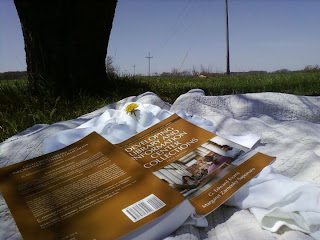
Reading for LIS 7340: Collection Development
Through my experiences and readings in Introduction to the Information Profession (LIS 6010) as well as Collection Development and Selection of Materials (LIS 7340), I felt compelled to develop a research proposal for the course Research in Library and Information Science (LIS 7996) which would focus on the topic of intellectual freedom and censorship. Being interested in small and rural libraries, selecting whom to study presented little challenge to me. Libraries that serve smaller populations, deemed Class 1 – 3 institutions, make up almost 60% of Michigan's public libraries yet in order to receive state aid they are not required to hire directors with a MLIS degree and out of the directors serving at these institutions only 23.7% actually hold professional credentials in librarianship (Library of Michigan, 2012). While conducting the literature review for my research proposal, I learned via studies conducted by Curry (1997) and Pooley (2008) that even directors holding professional credentials have identified themselves as having little or no training in dealing with censorship and intellectual freedom issues – yet the consequences of poorly handling a challenge could result in damaged relations with the community, termination of employment, and even the possibility of a lawsuit. While the ALA has set forth the Code of Ethics which seeks to give guidance on the topic of censorship and intellectual freedom, Fiske (1959) identified in her study that many selectors are actually practicing forms of self-censorship when making collection development decisions. Thus the goal of my proposed study sought to explore the state of collection development policies and practices as well as training pertaining to intellectual freedom and censorship in Class 1 – 3 public libraries in Michigan. My proposed study has the potential to provide the field of library and information science insight into developing training efforts to bridge any identified gaps in the knowledgebase and comfort level of its practitioners.

The eighth guiding principle of the ALA’s Code of Ethics states, “We strive for excellence in the profession by maintaining and enhancing our own knowledge and skills, by encouraging the professional development of co-workers, and by fostering the aspirations of potential members of the profession” (para. 5). By way of conducting library visits for Introduction to the Information Profession (LIS 6010), reference observations for Access to Information (LIS 6120), and additional visits for Survey and Analysis of Literature for Children Preschool to Grade 3 (LIS 6510), Young Adult Literature (LIS 6530), as well as Programming and Services for Children and Young Adults (LIS 7250), it became abundantly apparent to me that librarians in which I encountered truly support the notion of “fostering aspirations of potential members of the profession” (ALA, 2012). With each visit in which I conducted, several assignments required multiple observations, I was warmly welcomed by staff, invited behind-the-scenes, and not only left the building with a plethora of information, but felt completely inspired by my experiences. Thanks to these visits, I have developed professional relationships with several area library directors whom have acted as mentors throughout my MLIS candidacy.

Suzanne Todd
The third and final learning outcome in which I have mastered proficiency in is, “[to] develop and apply current management and leadership theories and practices” (SLIS, 2012). I should start off by defining the difference between management and leadership: “The manager’s job is to plan, organize and coordinate. The leader’s job is to inspire and motivate” (The Wall Street Journal). While I have learned immensely from all of my classes, I have a special appreciation for the courses that were taught by two adjunct instructors who were actively practicing librarianship in the field – Beth Walker (College for Creative Studies) and Suzanne Todd (Eastpointe Memorial Library). It was these instructors, regardless of the particular course being taken, who shared front line stories which provided more insight and reality than any carefully concocted case study that could likely be found in a management textbook.

One assignment in Library Administration and Management (LIS 7040) required the class to read an article, What’s My Motivation? (Rogers, 1976), that provided a scenario which is all too common in today’s libraries: budget cuts and staff lay-offs. In the case study, a very vocal staff member spoke up at a meeting and essentially asked the question, “What’s my motivation?” In her lecture, Walker provided an example in which an employee proclaimed that she, being Beth Walker (the supervisor), was responsible for motivating her. Walker’s reply was along the lines of, “She is not responsible for motivating the individual person, but for creating an environment that is conducive to motivation.” My own thoughts on the case study which touches upon both management and leadership techniques:

I felt as though the Library Director, Mary Lawless, was incredibly reactive rather than proactive during the transition process. While I understand that each person has their individual differences and personality which in turn gives different perspectives, Mosca’s reaction demonstrated that she did not understand the organization’s interim goal: the library operating rather than shutting off the lights and closing the doors. If Lawless had spent a little time laying some foundation work with her staff, such as clearly explaining the organization’s financial crunch, developing a game plan for the additional responsibilities, consistently employing recognition and positive reinforcement with her management-style, perhaps the Mosca-situation might not have occurred because the “unknown” would have already been answered. “Fear of the unknown” is how I chalk up Mosca’s behavior behind her interruption.

What is an LIS professional? What are the characteristics, qualities and knowledge that will be most important to you as an LIS professional? To answer the first question, I must cite Preer (2008), who in her book, Library Ethics, cited Melvil Dewey:
The time was when a library was very like a museum, and the librarian was a mouser in musty books, and visitors looked with curious eyes at ancient tomes and manuscripts. The time is when the library is a school, and the librarian is in the highest sense a teacher, and the visitor is a reader among the books as a workman among his tools. Will any man deny to the high calling of such a librarianship the title of profession? (p. 9).
While the ALA Code of Ethics and the Library Bill of Rights are certainly a part of my philosophy, the five laws of library of science developed by Shiyali Ramamrita Ranganathan in 1931, also play a significant role in shaping my professional paradigm. The five laws are as follows: 1) Books are for use. 2) Books are for all. 3) Every book its reader. 4) Save the time of the reader. 5) The library is a growing organism (Haycock & Sheldon, 2008). In other words (and in the context of a modern public library and my own interpretation), the library and its many resources are for the public to use and the whole package needs to be easily accessible – the building, staff, and of course, the collection. The materials selected for the library should reflect the entire community in which the library is charged with serving – not just the frequent donor or the loquacious patron. Each reader has his/her own preferences and tastes; therefore, it is imperative that the library’s staff abstain from judging as well as be cognizant as to which formats are preferred by the community. In addition to having helpful, approachable, and knowledgeable library staff, saving the time of the reader also entails keeping the collection organized, easily accessible, and refreshed. And, finally, in order for the public library to survive, it must be viewed as a growing organism – changing and evolving to meet the needs of the community – otherwise it will become irrelevant and subsequently extinct.

Another statement which has profoundly affected my professional paradigm is one that I encountered while enrolled in Introduction to the Information Profession (LIS 6010). In her book, Library Ethics, Preer (2008) quoted the esteemed Lester Asheim:
Selection, then, begins with a presumption in favor of liberty of thought; censorship, with a presumption in favor of thought control. Selection’s approach to the book is positive, seeking its values in the book as a book, and in the book as a whole. Censorship’s approach is negative, seeking vulnerable characteristics wherever they can be found – anywhere within the book, or even outside it. Selection seeks to protect the right of the reader to reader; censorship seeks to protect – not the right – but the reader from himself from the fancied effects of his reading. The selector has faith in the intelligence of the reader; the censor has faith only in his own (p. 79).
I am truly grateful for the professional relationships which have developed through the course of my studies. While I have aspirations of directing a rural public library and conducting research in the public library arena, I also feel compelled to give back to the field which has been both warm and welcoming to me as a new professional; therefore, I am very passionate about the notion of teaching as an adjunct instructor at Wayne State University as well as hosting practicum students in the future. In closing, as an information professional, I pledge to uphold both the Library Bill of Rights and the Code of Ethics as set forth by the American Library Association.

References
American Library Association. (2006). Code of Ethics. Retrieved from http://www.ala.org/advocacy/proethics/codeofethics/codeethics

American Library Association. (1996). Library Bill of Rights. Retrieved from
http://www.ala.org/advocacy/intfreedom/librarybill

Curry, A. (1997). The limits of tolerance: Censorship and intellectual freedom in public libraries. Lanham, MD: Scarecrow Press.

Fiske, M. (1959). Book selection and censorship: A study of school and public libraries in California. Berkeley, CA: University of California Press.

Haycock, K., Sheldon, B. (2008). The portable MLIS: Insights from the experts. Westport, CT:
Libraries Unlimited.

Library of Michigan. (2012). Michigan public library survey statistics. Retrieved from
http://www.michigan.gov/libraryofmichigan/0,2351,7-160-18668_61707---,00.html

Lingo, M. (2003). Forbidden fruit: The banning of the Grapes of Wrath in the Kern County Free
Library. Libraries & Culture, 38(4), 351-377.

Pooley, A., Birdi, B. (2008). How ethical are we? Public Library Journal, 23(1), 12-15.

Preer, J. (2008). Library ethics. Westport, CT: Libraries Unlimited.

Robbins, L.S. (1994, Fall). Anti-communism, racism, and censorship in the McCarthy era: The case of Ruth W. Brown and Bartlesville Public Library. Journal of Education for Library and Information Science, 35(4), 331-334.

Rogers, M. (1976). What’s my motivation? Library Journal, 134(10), 52-53.

Walker, B. (2011, April). What’s my motivation: Case study. Retrieved from http://blackboard.wayne.edu

Wall Street Journal. (2012). What is the difference between management and leadership?
Retrieved from http://guides.wsj.com/management/developing-a-leadership-style/what-is-the-difference-between-management-and-leadership

Wayne State University – School of Library and Information Science. (2012). Mission and goals.
Retrieved from http://slis.wayne.edu/about/mission.php

Wednesday, January 30, 2013

Road Trip: Miniature Book Exhibit

On 12.10.2012, Janet and I took a road trip to the Library of Michigan in Lansing to check out the miniature book exhibit put on by the Miniature Book Society. Naturally, we took some time to browse the stacks...our beloved Z class. Here's a few photos from our visit:

Wednesday, October 17, 2012

Whirlwind

Busy doesn't even begin to describe this semester...and I cannot get over how fast it's moving along. It's been a whirlwind...

I've been spending my time doing homework/reading for LIS 7996, working at my practicum site (Caro Area District Library), and attending workshops to broaden my learning experiences...

Earlier in October, as part of my practicum project, I launched a survey in hopes of raising awareness and gaining insight into the information needs and practices of the legal community in Tuscola County. This morning, a similar survey targeting patrons and their legal information needs was launched within the library. 

Last week, I attended two "meet the candidate" sessions at Thumb area libraries which were facilitated by Bryon Sitler, Director of White Pine Library Cooperative. Session 1 was at Rawson Memorial District Library and featured 84th District House candidates Terry Brown (D) and Dan Grimshaw (R). The second session was held at Sandusky District Library and featured 83rd District House candidate Carol Campbell (D) -- Paul Muxlow (R, incumbent) was not present. All of the questions in which Sitler asked were relevant to libraries and the various issues in which they face.
Terry Brown (D), Me, Dan Grimshaw (R)

Carol Campbell (D) and I

To bed I go...

Tuesday, August 28, 2012

Formalized Curiosity

The following quote appeared in the first part of one of my textbooks for LIS 7996:

"Research is formalized curiosity. It is poking and prying with a purpose. It is a seeking that he who wishes may know the cosmic secrets of the world and that they dwell therein." --Zora Neale Hurston (1942)

Monday, August 27, 2012

Afternoon with Mum

I went to one of my favorite haunts -- Sandusky Antiques -- this afternoon after a lovely lunch with my Mum. Here are a few photos from my day:

Crab Cakes at The Stone Lodge in Port Sanilac

The lovely Millie
My purchases:
The Favorite Works of Mark Twain; The Tale of Genji; and,
The Mouse and the Motorcycle

Thursday, August 16, 2012

Practicum

My practicum site has been arranged: Caro Area District Library. I start in September.

Very geeked...and yet quite nervous.

In other news, last night I attended a lecture at the Holocaust Memorial Center -- Hate Speech in Cyberspace -- by Dr. Jack Kay, Eastern Michigan University. Tomorrow, I am attending a workshop hosted by the Michigan Historical Society -- Copyright Issues for Historic Collections.

Tuesday, August 14, 2012

Adventures in the Z Class

Yesterday, I seized the day by visiting the Library of Michigan while I am still on break between semesters and got lost in the Z class for a few hours browsing my favorite topic: censorship and intellectual freedom.

Between interviewing directors and practicing librarians as well as reading a fabulous book titled True Stories of Censorship Battles in America's Libraries -- edited by Kathy Barco and Valerie Nye -- I seem to have a pretty good grasp on the patron-side of challenges and censorship which prompted me to explore materials from the view of  librarians that are actually pro-censorship. So...I picked up Censorship: Opposing Viewpoints and read Thomas Storck's essay titled, A Case for Censorship: Defending the Poor from the Jaded Rich. 

Needless to say, I was pretty floored and as a result ended up logging into Facebook to capture a sentence in the essay's introduction. My status update read, "There is something wrong with the following sentence: 'Storck, a librarian in Washington, D.C., insists that censorship can both prevent harmful acts and facilitate society's intellectual pursuit of truth.'"

Thomas Storck (1994) posits: 
"For, human nature being what it is, it is naive to think we can freely read and view things that promote or portray evil deeds without sometimes feeling encouraged to commit such deeds. And if this is the case, then censorship can sometimes be a necessity...[case for censorship]...It can be stated in the following simple thesis: ideas lead to actions, and bad ideas often lead to bad acts, bringing harm to individuals and possible ruin to societies. Just as the state has the right to restrict and direct a person's activities when he is a physical threat to the community, so also in the matter of intellectual or cultural threats, the authorities have duties to protect the community." (Pages 18-19)
Further... 
"The ideal censor is not some ill-educated, parochial bigot, but someone of liberal education and continued wide reading, someone with a grasp of first principles and enough experience and wisdom to see how they should be put into practice." (Page 23)

"A final point that must be noted is the connection between anti-censorship arguments and the free market...It is primarily the rich who promote and subsidize ideas and art that undermine traditional ways of life, and it is primarily the poor who suffer on that account. Society exists to protect and promote the welfare of all, but especially of the poor and the workingman. To exalt the free and irresponsible expression of the individual is to take up a position contrary to the community's duty of protecting the poor...Only those with sufficient money and ennui have the time or resources to produce ideas or art that corrupt or debase." (Page 23 - 24)

My thoughts...
I wholeheartedly concur with the sentiments of Lester Asheim -- "Selection seeks to protect the right of the reader to read; censorship seeks to protect—not the right—but the reader from himself from the fancied effects of his reading. The selector has faith in the intelligence of the reader; the censor has faith only in his own."

While some might be disgusted by the availability of a book they deem 'morally bankrupt', I align myself with good old Ranganathan and his 5 laws of library science -- specifically: (2) Every reader his (or her) book; and, (3) Every book its reader. We live in a free society and people have the right to read what they wish to read...and not be censored by some "well meaning" individual. I wholeheartedly believe that a good public library will truly have something to offend everyone...and if it doesn't...then it's someone's private library.